

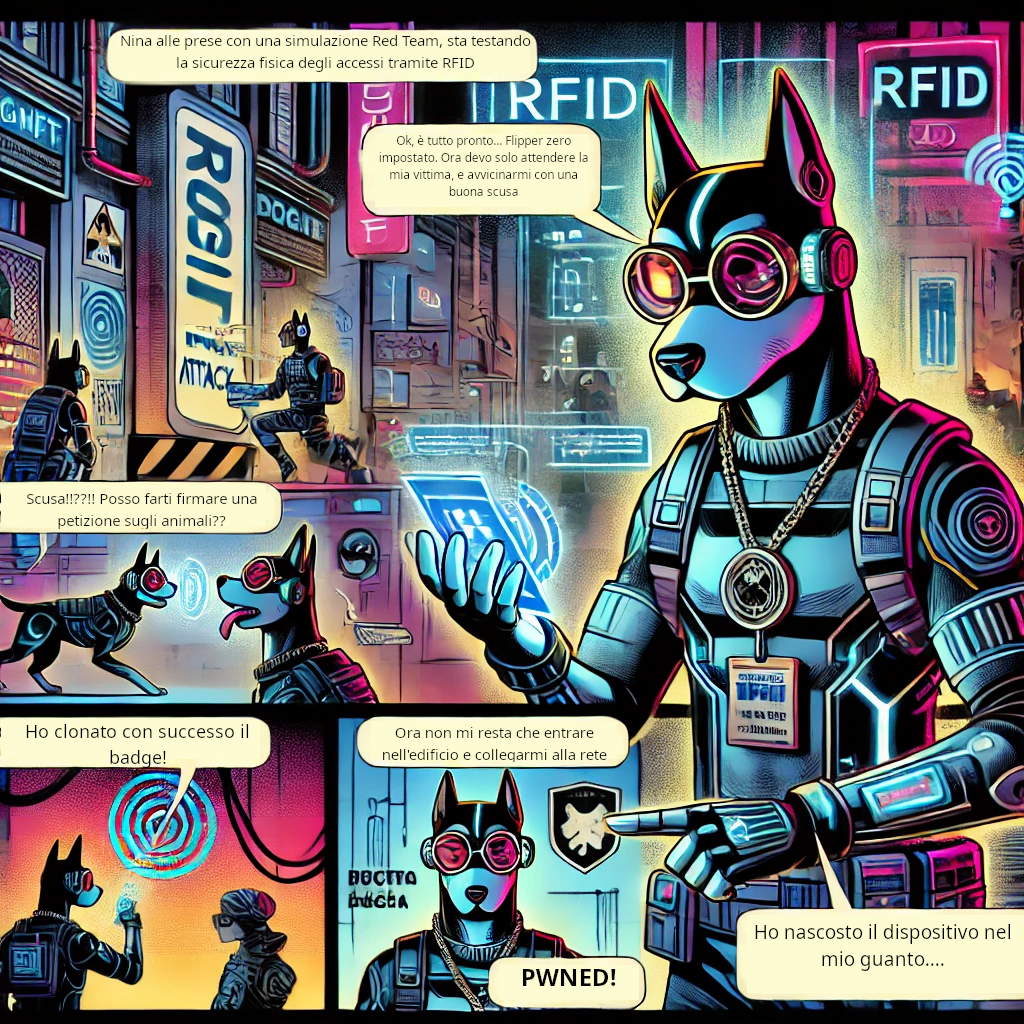
Attacks RFID (Radio Frequency Identification) is a growing threat to cybersecurity. RFID technology is widely used in access systems, contactless payments, logistics management, and product tracking. However, the vulnerability of these systems to certain types of attack poses serious concerns about privacy and security. Below we explore three typical RFID attack scenarios and related mitigation strategies.
Scenario 1: Data Skimming
Description of the attack:
An attacker physically approaches a victim with a hidden RFID reading device. The reader unauthorized the information on an RFID card (for example, a payment card or a corporate badge).
How it is prepared:
L'attaccante acquista o costruisce un lettore RFID ad alta potenza, facilmente reperibile online.
Configura il lettore per catturare i dati nel raggio massimo possibile.
Si avvicina in luoghi affollati come metropolitane o centri commerciali per avvicinarsi alle vittime.
Mitigation:
Utilizzo di protezioni fisiche: Portafogli schermati con materiale anti-RFID bloccano i segnali radio.
Adozione di tecnologie avanzate: Carte con crittografia dinamica o tecniche di autenticazione a doppio fattore riducono il rischio di compromissione.
Scenario 2: Cloning of Badge
Description of the attack:
In this case, the attacker reads the data of an RFID badge to clone it and physically access a reserved or sensitive area.
How it is prepared:
L'attaccante intercetta il badge RFID di un dipendente tramite un lettore mobile.
Duplica le informazioni su un nuovo chip RFID usando un programmatore.
Testa il badge clonato su un sistema RFID compatibile per assicurarsi che funzioni.
Mitigation:
Controlli di accesso più rigorosi: Implementare badge RFID con autenticazione multi-fattore (ad esempio, PIN o biometria).
Aggiornamento regolare dei badge: Utilizzare badge con credenziali a scadenza programmata o dinamiche.
Monitoraggio degli accessi: Sistemi che tracciano le attività sospette e bloccano accessi non autorizzati.
Scenario 3: Attacks Replay
Description of the attack:
An attacker intercepts communication between an RFID reader and a tag. Afterwards, send the signal intercepted to the reader to access or authenticate.
How it is prepared:
L'attaccante utilizza un dispositivo SDR (Software Defined Radio) per intercettare i segnali trasmessi.
Registra le informazioni durante l’interazione originale tra il lettore e il tag.
Riproduce i segnali al lettore per ingannarlo e ottenere accesso non autorizzato.
Mitigation:
Introduzione alla sicurezza RFID
Linee guida NIST sulla protezione dei sistemi RFID
Dispositivi per la protezione anti-RFID
Conclusions
RFID attacks highlight the importance of designing and using secure systems. RFID information protection requires a combination of advanced technologies, good security practices and user awareness. Investing in training and robust security solutions is critical to mitigating these threats.
If you have any doubts or need advice on how to protect your RFID systems, Dognet Technologies is here to help you!

