Many organizations regularly perform Vulnerability Assessment, receive reports with hundreds or thousands of vulnerabilities and, despite this, continue to have difficulty in effectively reducing the cyber risk.
The problem is rarely the lack of data.
The problem is to transform those data into effective actions.
An identified but unmanaged vulnerability remains an open risk. A correct vulnerability with months of delay still represents an exposure window that an attacker could exploit.
For this reason the concept of Continuous Monitoring is becoming increasingly central in modern cybersecurity strategies.
From Vulnerability Assessment to Vulnerability Management
Tools such as OpenVAS allow you to identify vulnerabilities within your business infrastructure through scheduled and periodic scans.
This activity is fundamental, but it represents only the first step.
Once the scan results are obtained, the questions become:
- What vulnerabilities must be corrected first?
- What are real risks to the organization?
- Who needs to take care of it?
- How to monitor the progress of remediation?
- How to verify that the problem has actually been solved?
Without a structured process, the risk is to accumulate ever bigger backlogs, consuming time and resources on unimportant vulnerabilities while the really exploitable criticalities remain open.
A strategy by Continuous Monitoring
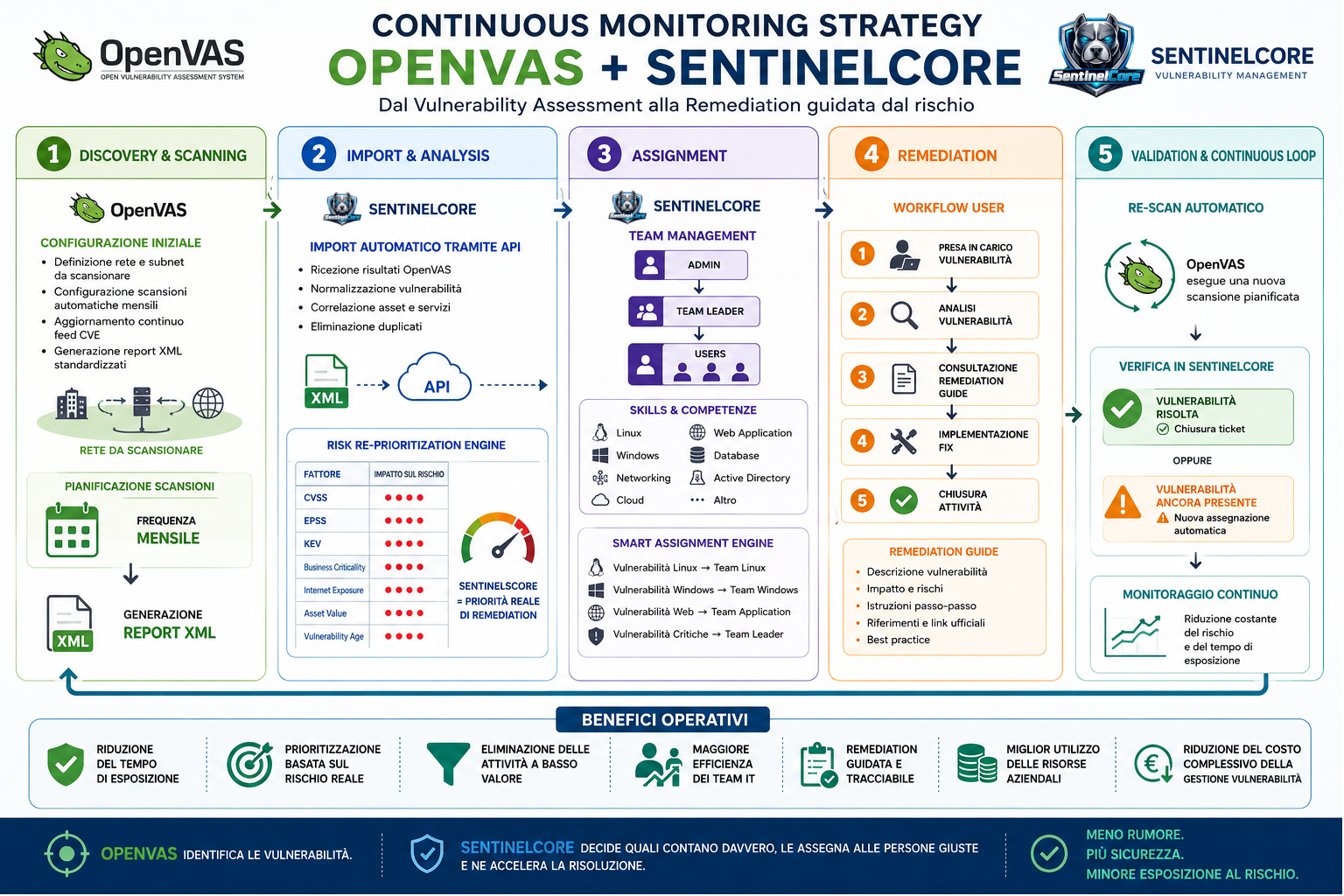
In the model shown in the infographic, OpenVAS and SentinelCore operate as an integrated ecosystem.
1. Continuous identification of vulnerabilities
OpenVAS is configured with:
- Assets and networks to monitor
- Automatic periodic scans
- Continuous update of vulnerability feeds
- Generation of reports in XML format
The goal is to maintain a constant visibility on the security status of the infrastructure.
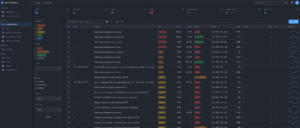
2. Automatic import and standardization
The scan results are automatically transferred to SentinelCore via API.
At this point the information comes:
- Normalized
- Related to business assets
- Deduplication
- Contextual
In other words, technical data is transformed into operational information.
3. Real Risk Prioritization
Not all vulnerabilities have the same impact.
A vulnerability with high CVSS may not be exposed or exploitable in the specific context of the organization.
On the contrary, a vulnerability with lower score could be an immediate risk if:
- Present in the catalogue KEV (Known Exploited Vulnerabilities)
- Associated with a high EPSS value
- Exposed on the Internet
- Installed on critical business systems
- Present on particularly sensitive assets
For this reason SentinelCore applies a logic of Risk-Based Vulnerability Management, combining:
- CVS
- KEV
- EP
- Criticism of the asset
- Exhibition
- Business value
- Age of vulnerability
The result is an operational priority that reflects the actual risk and not only a theoretical score.
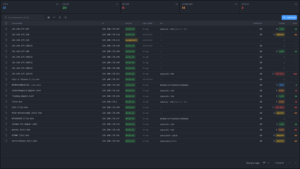
4. Intelligent asset assignment
One of the most critical aspects in remediation processes is to quickly identify the correct team.
In SentinelCore each user and group can be associated with specific skills:
- Linux
- Windows
- Networking
- Cloud
- Database
- Active Directory
- Web Application Security
When a vulnerability is identified, the system can automatically assign it to the most suitable group or Team Leader responsible.
This approach eliminates numerous manual steps and drastically reduces the time taken.
5. Remediation and continuous verification
Users receive assigned tasks and may:
- Analyze vulnerability
- Consult the indications of remediation
- Apply corrections
- Tracking progress
Later scans automatically verify the effectiveness of interventions.
If the vulnerability has been eliminated, the ticket is closed.
If the problem persists, it is reopened and reassigned.
In this way the cycle continues until the complete mitigation of risk.
The real goal: reduce exposure time
The most important KPI is not the number of vulnerabilities identified.
It is the time when a vulnerability remains exploitable within the organization.
Reduce this range means:
✅ Reduce the attack surface
✅ Decrease the probability of compromise
✅ Improve IT team operational efficiency
✅ Optimize investments in cybersecurity
✅ Focus on vulnerabilities that really matter
Security doesn't improve when we find out more vulnerabilities.
It improves when we can quickly identify those really dangerous, assign them to the right people and reduce their exposure time as much as possible.
This is where Vulnerability Assessment is transformed into a real process of Continuous Monitoring and Risk-Based Vulnerability Management.
It's really not. to the official release of sentinelcore, if you want to integrate it into your CM strategy or if you offer VAPT services and you want to assign it to your customers a targeted remediation plan instead of long reports after useless call Contact us for a demo or to explore all possibilities. Sentinelcore is opensource and free for the community, we also have a licensing plan really very convenient for companies that want to integrate our products.
#CyberSecurity #VulnerabilityManagement #ContinuousMonitoring #OpenVAS #RiskManagement #EPSS #KEV #ThreatManagement #Remediation #SentinelCore #DognetTechnologies #InformationSecurity #CTO #CTO #CTO #CYberRisk #VulnerabilityAssesment

