The cybersecurity andEthical hacking are two faces of the same medal, but often confused or misinterpreted. The main difference lies in the end: while cybercrime tries to exploit vulnerabilities to profit, theethical hacking exploits them to discover and correct faults before they can be used by malicious actors. In this article, we will explore what it really means to protect, what are the methods and tools used by ethical hackers, and how these practices integrate into a comprehensive cybersecurity strategy.
Cybersecurity: Protecting the Company from a Sea of Threats
Cybersecurity is the set of practices, processes and technologies used to protect networks, devices and data from unauthorized access, attacks or damage. It includes different disciplines, such as vulnerability management, network security, application security, and much more.
Today, many companies adopt a strategy Zero Trust, that assumes that no element within or outside the network should be considered reliable without continuous verification. The Zero Trust model is essential to address increasingly sophisticated threats and makes security an integral part of the infrastructure itself. Here is an insight into Zero Trust by Forrester.
Ethical Hacking: How to Work a White Hat
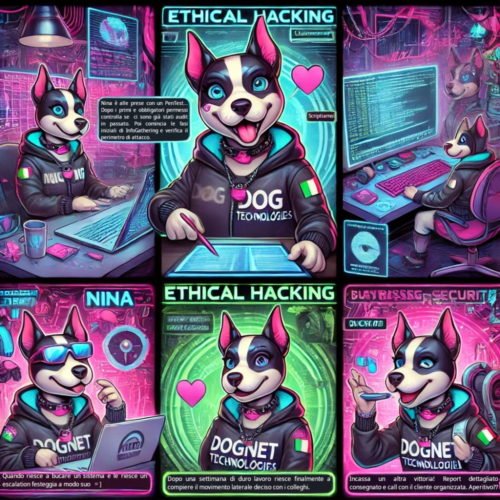
The ethical hackers (often called white hat) are professionals trained to think like a criminal, but act with permission and for beneficial purposes. They simulate attacks to find vulnerabilities and identify security flaws that could be exploited by real attackers.
Example of Ethic Hacking: The Penetration Test
A common example of ethical hacking is penetration test. This process plans to identify possible access routes to a system, just like a hacker would. The penetration testers use different techniques, such as black-box testing, in which they have no prior system information, and white-box testing, where they have full access to target system information.
A tool widely used for these tests is Kali Linux, a distribution specifically created for security and penetration testing. Contains tools such as Nmap for network scanning and Metasploit for exploit execution on known vulnerabilities. You can find more information about Kali Linux here.
Cybersecurity and Ethic Hacking: A Necessary Collaboration
Collaboration between cybersecurity and ethical hacking is essential to strengthen business defenses. While cybersecurity deals with establishing rules and setting up defensive solutions, ethical hackers challenge them, trying to find weak points.
Case Study: The Positive Effect of the Bug Bounty
Bug Bounty programs are a perfect example of how ethical hacking can complete cybersecurity. These programs, offered by large companies like Google and Facebook, allow ethical hackers to search for vulnerabilities in their systems, offering cash prizes for every vulnerability discovered.
HackerOne, a leading platform in the field of bounty bugs, reported that many companies managed to improve their security by over 70% thanks to the contributions of ethical hackers. Find out how HackerOne works here.
Tool and Framework Used by Ethical Hackers
Here is a list of some tools commonly used by ethical hackers:
N.: Used for scanning networks and identifying open doors. Deepen Nmap here.
Metasploit: Used to perform exploits and simulate attacks. Read more about Metasploit here.
Burp Suite: An essential tool for web application security testing. Find more information here.
OWASP ZAP: Another widely used open-source tool for web application vulnerability testing. Discover OWASP ZAP here.
Best Practice for Companies
Integrate a Penetration Testing Program: Every company should have regular tests performed by ethical hackers. This ensures vulnerabilities are discovered before attackers.
Adoption of Security DevSecOps: Integrates security directly into the software development cycle, working closely with ethical developers and hackers.
Promote Employee Consciousness: Many attacks, such as phishing, can be prevented by continuous training. Ethic hackers can help simulate attacks and make employees more aware.
Conclusion
Cybersecurity is a continuous challenge. Every company that wants to remain protected must adopt a strategy that includes both solid defenses, and a constant test of these defenses by experienced professionals such as ethical hackers.
In Dognet Technologies, we believe that protecting also means constantly testing and challenging your security, to stay a step ahead of attackers. Ethical hacking is our best ally for strong and resilient defense.
If you have found this article interesting, or if you want to learn more about how we can help you improve your safety with ethical tests and comprehensive evaluations, feel free to contact us!

